
DATA ANALYTICS FOR HEALTH CARE SUMMIT | Day 2:
7:45 am
NETWORKING BREAKFAST: RECONNECT WITH YOURHEALTHCARE DATA COMMUNITY
- Reconnect with peers and continue conversations from Day 1.
- Compare approaches to AI governance, healthcare analytics, and digital transformation.
- Prepare for a day focused on responsible AI, clinical intelligence, and operational innovation.

8:45 am
OPENING COMMENTS FROM YOUR HOST
Gain insight into today’s sessions and discover the practical strategies shaping the next generation of intelligent healthcare systems.
9:00 am
OPENING PANEL: INTEROPERABILITY
Beyond Technical Interoperability: Tackling the Policy- and People-Driven Barriers to Advancing Digital Health and Connected Data in Canada
Connecting data across disparate digital systems is a critical part of enabling the meaningful use of health information; however, discussions of data interoperability often focus on technical factors which are necessary, but not sufficient to achieve the data connectivity we so desperately need in Canada. Develop a step-by-step plan to:
- Optimize the policy and human factors which are instrumental to a connected data future.
- Connect data governance, data literacy, and policy together more effectively
- Realize a connected, person-centered health data system



9:30 am
INDUSTRY EXPERT: UNLOCKING THE CLINICAL NARRATIVE
How Generative AI is Transforming Unstructured Healthcare Data
The majority of healthcare information exists within clinical notes, reports, discharge summaries, referrals, imaging narratives, and other unstructured sources. Generative AI, natural language processing, and large language models are creating new opportunities for you to unlock value from clinical information while improving efficiency and care quality. Walk away with a framework to:
- Excel and extract actionable intelligence from unstructured healthcare data.
- Improve clinical documentation, coding, and information retrieval.
- Bolster research, operational planning, and patient care initiatives.
- Achieve and govern unstructured data use responsibly and securely.
Transform your clinical documentation into a strategic source of healthcare intelligence.
10:00 am
ROUNDTABLES: DISCOVER THOUGHT-PROVOKING IDEAS
Take a deep dive into your strategy, exchange experiences, and discuss implementation lessons with healthcare leaders facing similar challenges.
- Topic 1: Implementing Clinical GenAI Safely: Lessons from Early Deployments.
- Topic 2: From AI Pilot to Clinical Workflow: What Actually Scales?
- Topic 3: Building Trust in AI Recommendations and Clinical Decision Support.
- Topic 4: Predictive Analytics for Patient Flow and Capacity Management.
- Topic 5: Balancing Privacy, Consent, and Innovation in Healthcare AI.
10:45 am
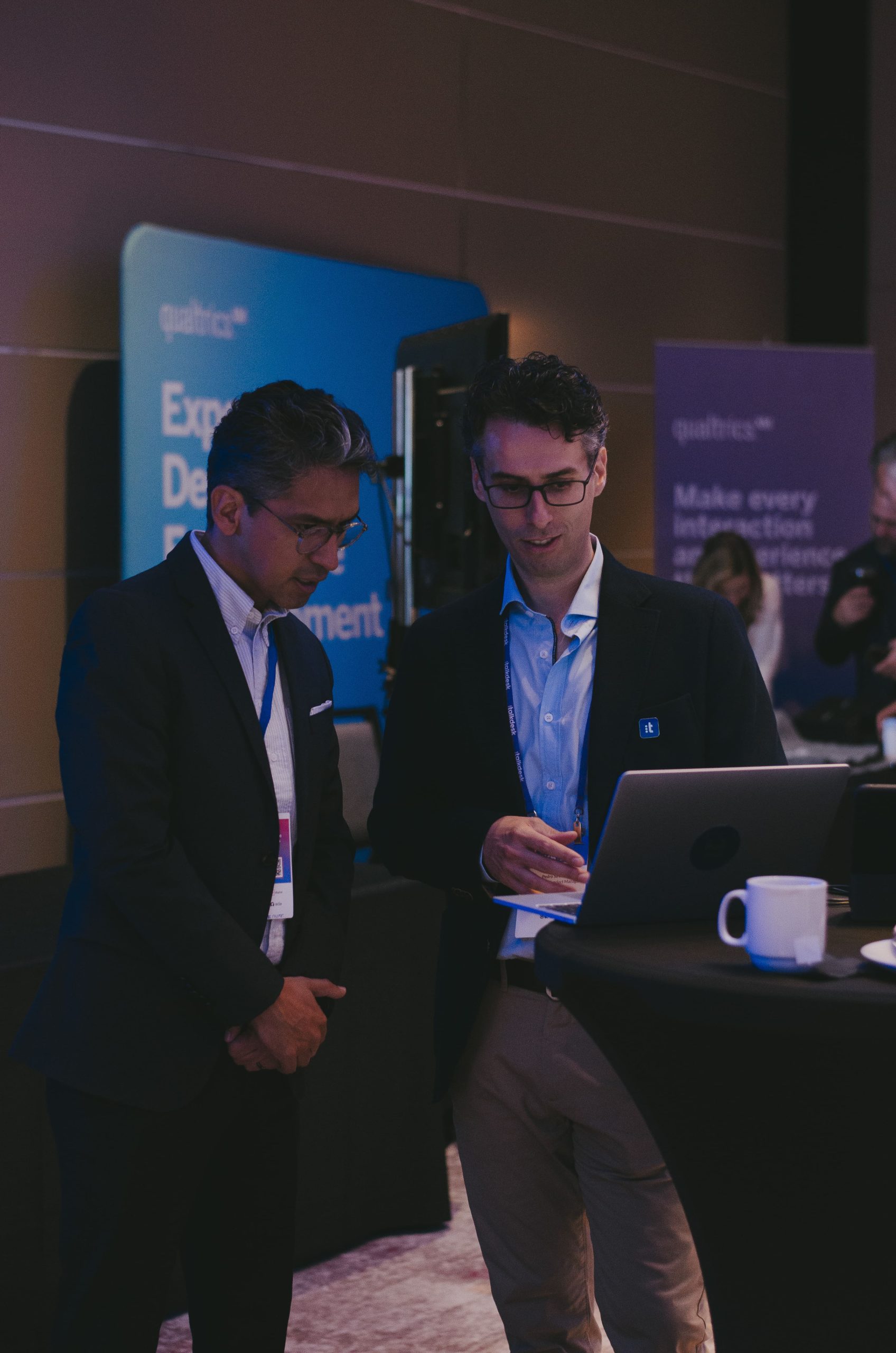
EXHIBITOR LOUNGE: VISIT BOOTHS & SOURCE EXPERTISE
- Meet healthcare technology providers supporting AI, analytics, interoperability, cybersecurity, governance, and digital transformation.
- Discuss practical implementation challenges and source expert guidance.
- Schedule one-on-one consultations tailored to your organization’s priorities.
11:15 am
CASE STUDY: THE INTELLIGENT HEALTH SYSTEM
How to Lead Transformation Through Data, Analytics, and AI
Healthcare organizations face mounting pressure to improve patient outcomes, reduce operational strain, address workforce shortages, and deliver more efficient services. The future belongs to healthcare systems that can operationalize insights, embed intelligence into workflows, and drive measurable improvements across care delivery. Create a roadmap to:
- Align transformation initiatives directly to clinical, operational, and patient priorities.
- Improve decision-making through trusted analytics and actionable intelligence.
- Heighten workforce productivity through automation and AI-enabled workflows.
- Optimize and scale innovation beyond pilots to enterprise-wide adoption.


11:15 am
CASE STUDY: DATA DRIVEN INNOVATION IN PHARMA
Beyond the drug: How Data Can Connect Pharma and Health Systems Across the Patient Journey
Healthcare data is increasingly distributed across hospitals, pharmaceutical organizations, research environments and patient-facing systems — yet much of its potential remains locked within organizational boundaries. As pharma looks to contribute beyond individual therapies, data leaders have an opportunity to build the trusted connections that enable richer insights into prevention, treatment, outcomes and tertiary care. Walk away with a roadmap to:
- Connect clinical, pharmaceutical and real-world data to generate a more complete view of patient pathways and outcomes.
- Break down organizational and technical data silos through stronger interoperability, standards and information-sharing frameworks.
- Establish governance, privacy and consent models that enable valuable collaboration while maintaining appropriate controls over sensitive health data.
- Apply analytics and AI to combined datasets to identify risk earlier, understand treatment effectiveness and uncover opportunities for better intervention.
- Operationalize shared insights so that data collaboration translates into measurable improvements in clinical decisions, patient outcomes and system performance.
Build the trusted data foundations that move from fragmented datasets towards a connected healthcare ecosystem spanning prevention, treatment and ongoing care.
11:45 am
PANEL: AI INNOVATION AND ROI
FROM DATA SCIENCE TO CARE DELIVERY: How to Turn AI Innovation Into Measurable Healthcare Impact
Healthcare organizations are rapidly expanding their ability to develop predictive models, advanced analytics and AI solutions, but technical success does not automatically translate into better care. The greater challenge for data leaders is determining which problems are worth solving, connecting innovation to clinical workflows, and proving that new capabilities deliver meaningful and sustainable value. Drawing on experience from Unity Health Toronto, walk away with a roadmap to:
- Prioritize data science and AI opportunities around clearly defined clinical and operational challenges rather than technology-led experimentation.
- Translate complex healthcare data into models and insights that clinicians and operational leaders can confidently use.
- Integrate analytics and AI into existing workflows so insights reach the right people at the right point in decision-making.
- Validate solutions for accuracy, safety, usability and real-world impact before moving from experimentation into broader deployment.
- Measure whether data science initiatives are improving outcomes, efficiency and decision-making — and use that evidence to determine what should scale.
Close the gap between data science innovation and frontline impact by building AI and analytics capabilities around the realities of healthcare delivery.
11:45 am
PANEL: COLLABORATION MODELS
Beyond the Hospital – How to Break Down the Data Barriers to a Truly Connected Healthcare Ecosystem
Some of the data needed to understand and improve a patient’s health sits far beyond the hospital — across pharmaceutical companies, MedTech, diagnostics, community care, research organizations and other critical partners. Yet fragmented systems, restrictive data-sharing models, unclear governance and limited interoperability continue to prevent these organizations from contributing fully to prevention, treatment and long-term care. Walk away with a roadmap to:
- Identify the technical, regulatory and organizational barriers preventing valuable health data from flowing safely across the wider ecosystem.
- Establish trusted governance, consent and data-sharing frameworks that enable collaboration without compromising privacy, security or accountability.
- Connect clinical data with pharmaceutical, MedTech, diagnostic and real-world data to develop a more holistic understanding of patients and their journeys.
- Align standards, architectures and interoperability approaches so insights can move between organizations and become usable within clinical workflows.
Move beyond hospital-centric data strategies to create a trusted, connected ecosystem where the full range of healthcare partners can contribute to prevention, intervention, treatment and better long-term patient outcomes.
12:15 pm
NETWORKING LUNCH: CONTINUE THE AI CONVERSATION
- Meet speakers, reconnect with peers, and continue conversations around AI governance, healthcare innovation, and operational intelligence.
- Share lessons learned and discuss practical implementation strategies.
- Build relationships with leaders shaping the future of healthcare AI.

1:30 pm
EXHIBITOR LOUNGE: VISIT BOOTHS & WIN PRIZES
- Explore healthcare AI demonstrations and emerging analytics technologies.
- Meet with solution providers and discuss implementation priorities.
- Enter prize draws and access exclusive conference resources.

1:45 pm
CASE STUDY: IMPLEMENTING CLINICAL GENAI SAFELY
How to Learn Lessons from Early Healthcare Deployments
Healthcare organizations are beginning to deploy generative AI across documentation, patient communications, administrative support, and clinical workflows. Early adopters are discovering that success depends upon balancing innovation with governance, validation, safety, and clinician trust. You’ll create a roadmap to:
- Perfect appropriate use cases for clinical generative AI.
- Adapt validation and monitoring practices.
- Reduce safety and compliance risks.
- Strengthen clinician confidence and adoption.
Build your trusted generative AI capabilities that improve healthcare delivery safely.
1:45 pm
Building The Data Foundations For Integrated Care- Lessons from East Toronto’s Chronic Disease Pathways
Delivering truly integrated care for patients with chronic disease requires hospitals, primary care, home care and community organizations to work as one connected system — yet the data supporting that journey often remains fragmented across organizations, platforms and workflows. Drawing on East Toronto’s experience building integrated chronic disease pathways, discover how stronger data foundations can connect care today while creating the trusted foundation for tomorrow’s AI-enabled services. Walk away with a roadmap to:
- Connect fragmented data across hospitals, primary care, home care and community partners to support a more coordinated patient journey.
- Standardize referrals, data capture and reporting so information can move more consistently between organizations and care settings.
- Integrate tools such as REDCap, dashboards and reporting capabilities into operational workflows rather than creating additional layers of complexity.
- Govern data across organizational boundaries to improve quality, consistency, accountability and trust.
Turn fragmented data and disconnected workflows into the shared information foundation required for integrated chronic disease management — and ensure future AI is built on data that healthcare teams can trust.

1:45 pm
How to Use Advanced Analytics to Improve Patient Flow and Capacity
Patient volumes, workforce shortages, and resource constraints continue to create operational pressure throughout healthcare systems. Predictive analytics offers you new opportunities to anticipate demand, improve resource allocation, and strengthen service delivery. Walk away with a framework to:
- Bolster and forecast patient volumes and operational demand.
- Improve capacity planning and resource utilization.
- Achieve proactive operational decision-making.
- Reduce bottlenecks across patient journeys.
Transform your operational data into proactive healthcare decision-making.
2:15 pm
TRACK SESSION: PRIVACY-BY-DESIGN FOR THE AI ERA
How to Build Trusted Foundations for Healthcare Data Sharing
As healthcare organizations expand data sharing and AI adoption, privacy considerations must move from compliance exercises to foundational design principles. Sustainable innovation requires you to protect patient information while supporting collaboration and insight generation. Develop a blueprint to:
- Advance and embed privacy requirements directly into data architectures.
- Improve trust in healthcare data-sharing initiatives.
- Strengthen governance and compliance practices.
- Excel innovation without increasing organizational risk.
Create trusted healthcare ecosystems where privacy and innovation work together.

2:15 pm
From Principle to Proof: Can Data and Innovation Keep Health Equity on the Healthcare Agenda?
Health equity has entered a more challenging era. Economic pressures, shifting political priorities and competing demands on healthcare systems are changing how organizations prioritize equity initiatives — even as disparities in access, outcomes and experience remain highly visible in the data. At the same time, pioneering organizations are demonstrating how equity-focused data, analytics and innovation can uncover underserved populations, redesign services and improve outcomes. Join healthcare leaders to explore what comes next and walk away with insights to:
- Demonstrate where equity-focused data and analytics are delivering measurable improvements in access, experience and health outcomes.
- Explore innovative use cases where organizations are redesigning pathways, targeting interventions and allocating resources based on a deeper understanding of patient need.
- Examine how AI could either reduce or reinforce existing inequalities — and what data leaders must do to ensure emerging technologies work effectively across different populations.
- Debate what the next generation of health equity should look like as healthcare organizations respond to changing economic, political and societal priorities.
Move the health equity conversation from aspiration to evidence — and explore whether data, measurable outcomes and innovation can provide the foundation for its next chapter.


2:45 pm
RACK SESSION: DEVELOPING RESPONSIBLE AI CONTROLS
How to Achieve Governance for High-Stakes Healthcare Environments
Healthcare AI applications frequently operate within environments where mistakes can have significant consequences. Your organization requires governance controls capable of supporting innovation while protecting patients, clinicians, and healthcare organizations. Develop a blueprint to:
- Achieve practical responsible AI frameworks.
- Improve transparency and accountability.
- Reduce bias, safety, and compliance risks.
- Bolster trust in AI-supported decisions.
Create your AI governance framework designed for healthcare’s highest-stakes decisions.
2:45 pm
TRACK SESSION: REAL-TIME INTELLIGENCE FOR HEALTHCARE OPERATIONS
How to Build Continuous Visibility Across Care Delivery
Healthcare leaders increasingly require real-time visibility into patient flow, staffing pressures, capacity constraints, and operational performance. Your traditional reporting approaches often fail to provide the speed required for modern healthcare decision-making. Achieve a step-by-step action plan to:
- Improve operational visibility across healthcare environments.
- Bolster proactive intervention and decision-making.
- Reduce delays and bottlenecks.
- Advance organizational responsiveness.
Move from your traditional retrospective reporting to real-time healthcare intelligence.
3:15 pm
EXHIBITOR LOUNGE: ATTEND VENDOR DEMOS & CONSULT INDUSTRY EXPERTS
- Explore innovative healthcare AI technologies and implementation strategies.
- Meet one-on-one with experts and discuss practical organizational challenges.
- Source actionable ideas to support healthcare transformation initiatives.

3:45 pm
CASE STUDY: MLOPS FOR HEALTHCARE
How to Excel Monitoring, Governance, and Lifecycle Management of AI Models
As healthcare AI deployments expand, organizations require operational practices capable of managing models throughout their lifecycle. Monitoring, governance, explainability, and performance management are becoming essential capabilities for long-term success. Adopt best practices to:
- Advance and monitor healthcare AI models in production environments.
- Improve reliability, transparency, and governance.
- Impact and detect performance degradation and emerging risks.
- Achieve and support scalable AI operations across the enterprise.
Build AI capabilities that remain trusted long after you deploy them.
4:15 pm
CASE STUDY: ENTERPRISE AI ADOPTION IN HEALTHCARE
How to Build the Organizational Foundations for Sustainable Transformation
Technology alone does not drive transformation. Your healthcare organization must establish leadership alignment, workforce readiness, governance structures, and change management practices that support long-term adoption. Develop a blueprint to:
- Improve organizational readiness for AI adoption.
- Align stakeholders around common objectives.
- Increase workforce engagement and capability development.
- Bolster innovation across the healthcare enterprise.
Transform your AI from a technology initiative into an organizational capability.

4:45 pm
CLOSING PANEL: THE INTELLIGENT HEALTH SYSTEM 2030
What Will Separate Healthcare Leaders from Everyone Else?
The next generation of healthcare leaders will not be defined by those who adopted AI first. Success will belong to organizations that build stronger foundations for trust, interoperability, governance, operational intelligence, and workforce transformation. Walk away with a strategy to:
- Impact the capabilities that will define healthcare leadership over the next five years.
- Bolster investment across data, analytics, AI, and digital health initiatives.
- Adapt to rapid technological change while maintaining trust and accountability.
- Excel your organization for long-term success in an increasingly intelligent healthcare environment.
Turn your healthcare transformation decisions of today into tomorrow’s competitive advantage.

5:30 pm
CLOSING COMMENTS FROM YOUR HOST
- Review the key themes, lessons, and implementation strategies discussed throughout the conference.
- Identify practical next steps to support your organization’s healthcare transformation journey.
- Leave with a clear understanding of the priorities shaping the future of healthcare data, analytics, and AI.
5:45 pm
CONFERENCE CONCLUDES
Thank you for joining the Data Analytics for Healthcare Summit 2026. Safe travels, and we look forward to welcoming you back next year.